
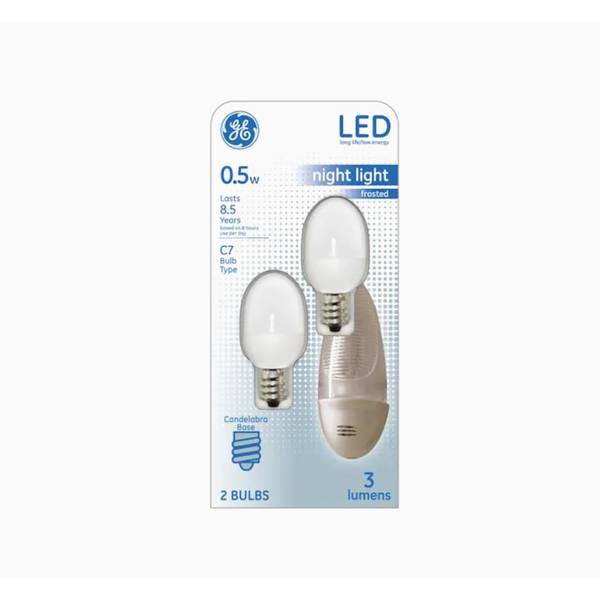
GE 4 Watt Clear Night Light Bulb Review: A Practical Guide Before Buying
GE 4 Watt Clear Night Light Bulb Review: A Practical Guide Before Buying
This review examines GE 4 Watt Clear Night Light Bulb as a real shopping reference rather than treating a product name as a complete specification sheet. The listing identifies this item as a practical review of a low-wattage night-light bulb. That distinction matters because the right purchase depends on how the product fits a buyer's space, routine, compatibility requirements, and expectations.
The current SearchNShop listing shows a displayed price of $ 5.99. Price, availability, seller information, specifications, and other listing details can change, so the live product page should always be checked before checkout. View GE 4 Watt Clear Night Light Bulb on SearchNShop
Rather than declaring a universal winner, this article focuses on the decisions a careful buyer should make: what the product is designed to do, where it may fit well, what limitations to consider, how to compare alternatives, what ownership can involve, and which details deserve verification. Where the listing does not establish a specification, this review does not invent one.
What the GE Listing Tells Us
The listing identifies this item as a GE 4 Watt Clear Night Light Bulb. The low-wattage description gives the buyer an immediate clue about the product category and intended type of use, but it does not by itself establish every compatibility detail or the exact visual experience in every fixture. Those details should be checked against the bulb base, fixture requirements, and any information provided on the live listing or packaging.
Where a Night-Light Bulb Fits Best
A night-light bulb is generally evaluated differently from a room's primary lighting source. The practical goal may be gentle visibility in a hallway, bedroom, bathroom, entry area, nursery, or other location where a small amount of light is useful. The right choice depends on how much illumination is needed, how the fixture directs light, and whether the user wants visibility without making the room feel brightly lit.
Why Wattage Is Not the Whole Story
Four watts tells you about electrical power consumption, but wattage alone does not tell you exactly how bright a bulb will appear. Brightness can depend on the bulb technology, optical design, fixture, and surrounding surfaces. For that reason, shoppers should look for the relevant lighting specifications rather than translating wattage directly into a brightness expectation.
Check the Socket and Fixture First
The most important pre-purchase check for a replacement bulb is often the fixture itself. Confirm the base type, voltage requirements, physical dimensions, and any fixture-specific restrictions. A bulb can be the correct wattage yet still be incompatible with the socket or unsuitable for the fixture. If the original bulb is available, compare its markings with the replacement listing before ordering.
Clear Glass and Visual Appearance
The word clear in the product name can matter to shoppers who care about the bulb's visible appearance inside a fixture. The final look, however, also depends on the shade, lens, housing, and position of the bulb. If the bulb will be visible, consider how its shape and finish will interact with the fixture rather than judging the bulb in isolation.
Start With What the Product Needs to Do
The most useful product review starts with the job rather than the product name. Before judging a listing, identify the situation in which the item will be used, how often it will be used, who will interact with it, and what would make the purchase disappointing. This approach is especially important when a product sits inside an existing routine, because a specification that looks impressive in isolation may have little practical value. A good decision begins by defining the outcome you want.
For GE 4 Watt Clear Night Light Bulb, the first question is therefore not whether the product looks attractive in a search result. It is whether its described form and function match the buyer's real situation. The listing gives us a concrete starting point, but the final decision should connect that information to the environment in which the item will operate.
For shoppers considering GE 4 Watt Clear Night Light Bulb, this point is worth translating into a simple decision rule: start with the requirement that could make the purchase fail, verify it first, and only then spend time comparing secondary preferences. That keeps the review grounded in the buyer's actual situation instead of turning the decision into a competition between marketing claims.
Read the Listing as a Starting Point, Not the Whole Decision
A marketplace listing is valuable because it gives shoppers a concrete product to investigate, but it should not be treated as a complete substitute for the manufacturer's documentation. Names can compress important information, while prices and availability can change. For that reason, the live listing should be checked immediately before purchase. Pay attention to the exact model or product identity, dimensions, compatibility information, included items, care requirements, warranty information, seller details, and return conditions where available.
In this case, the product page at SearchNShop should be treated as the live source for current listing details. That is particularly important when a shopper is comparing price or availability, because those elements are not permanent characteristics of the product.
Who Is This Product For?
A product is easier to evaluate when its likely audience is described in practical terms. The right buyer is not simply someone who likes the brand or the headline specification. It is someone whose environment, routine, expectations, and budget line up with what the item actually does. Conversely, a product can be a poor fit even when it is well regarded if its installation, operation, size, maintenance, or required accessories conflict with the buyer's circumstances.
For shoppers considering GE 4 Watt Clear Night Light Bulb, this point is worth translating into a simple decision rule: start with the requirement that could make the purchase fail, verify it first, and only then spend time comparing secondary preferences. That keeps the review grounded in the buyer's actual situation instead of turning the decision into a competition between marketing claims.
The First Week Matters More Than the First Impression
Many purchases feel obvious while they are still in a browser tab. The more revealing test is to imagine the first week of ownership. Where will the item be installed or stored? What will you touch, clean, adjust, connect, charge, replace, or monitor? Will another person need to understand it? Which part of the routine could become annoying? Thinking through these questions exposes friction that a product title rarely communicates.
Fit and Compatibility Come First
Compatibility is one of the easiest buying criteria to overlook because it is less exciting than a headline feature. Yet an item that does not fit the available space, connection, socket, system, furniture, listening chain, or intended environment can have little value. Measurements and interface requirements should therefore be checked before price is treated as the deciding factor. If the listing does not make a critical requirement clear, that is a reason to investigate further rather than assume.
For shoppers considering GE 4 Watt Clear Night Light Bulb, this point is worth translating into a simple decision rule: start with the requirement that could make the purchase fail, verify it first, and only then spend time comparing secondary preferences. That keeps the review grounded in the buyer's actual situation instead of turning the decision into a competition between marketing claims.
What the Headline Specification Really Tells You
A specification becomes useful only when it changes the real-world experience. A number can establish a boundary, but it does not automatically describe comfort, convenience, reliability, noise, ease of maintenance, or suitability. The right question is not whether a specification sounds strong; it is whether that specification solves a problem that matters in your use case. This is a better way to separate meaningful product information from attractive but low-priority details.
Installation and Setup Should Be Part of the Review
Setup is part of product performance because a difficult installation can reduce the value of an otherwise capable item. Consider the tools, measurements, connections, clearances, power requirements, placement decisions, and adjustment steps involved. Also consider whether the installation is something a typical buyer can reasonably complete or whether professional help may be appropriate. These are not minor details when the product is intended to become part of a fixed environment or a larger system.
For shoppers considering GE 4 Watt Clear Night Light Bulb, this point is worth translating into a simple decision rule: start with the requirement that could make the purchase fail, verify it first, and only then spend time comparing secondary preferences. That keeps the review grounded in the buyer's actual situation instead of turning the decision into a competition between marketing claims.
Daily Workflow and Ease of Use
The strongest products often disappear into a routine because they are easy to operate. Evaluate the number of steps required for normal use, the clarity of controls, the effort involved in maintenance, and how quickly a user can recover from a mistake. A product that saves a few seconds every day can become more valuable over time than one with an impressive feature that is rarely used. Convenience should therefore be judged across repeated interactions, not just during setup.
Materials, Construction, and What You Can Actually Verify
Construction quality matters, but reviews should distinguish observable information from assumptions. If the listing identifies a material or construction detail, treat that as useful evidence. Do not automatically infer durability, premium performance, or long service life from appearance alone. Instead, look at how the construction relates to the environment in which the item will be used, whether it needs special care, and whether replacement or repair information is available.
For shoppers considering GE 4 Watt Clear Night Light Bulb, this point is worth translating into a simple decision rule: start with the requirement that could make the purchase fail, verify it first, and only then spend time comparing secondary preferences. That keeps the review grounded in the buyer's actual situation instead of turning the decision into a competition between marketing claims.
Maintenance Is Part of the Purchase Price
Ownership costs include more than the amount paid at checkout. Depending on the category, maintenance can involve cleaning, replacing consumables, checking connections, caring for surfaces, changing parts, or following storage procedures. The correct maintenance schedule should come from the manufacturer's instructions when available. During the buying process, however, it is still worth asking whether you are willing to perform the required care consistently. The best product on paper can become poor value if its upkeep does not fit your routine.
Price Should Be Judged Against Use
A lower price is attractive, but price alone does not establish value. A product used every day can justify a different budget from one used occasionally. Think about frequency of use, expected convenience, installation effort, maintenance, accessories, and the cost of replacing the item if it proves unsuitable. This does not mean that the most expensive choice is best. It means that the price should be interpreted in the context of what the product is expected to accomplish.
For shoppers considering GE 4 Watt Clear Night Light Bulb, this point is worth translating into a simple decision rule: start with the requirement that could make the purchase fail, verify it first, and only then spend time comparing secondary preferences. That keeps the review grounded in the buyer's actual situation instead of turning the decision into a competition between marketing claims.
Compare Alternatives Using the Same Criteria
Comparison becomes unreliable when each product is judged by a different standard. Pick a short list of criteria and apply them consistently. For example, you might compare compatibility, ease of use, maintenance, physical fit, and overall value. Then identify which criteria are non-negotiable and which are preferences. This prevents a product from winning simply because it happens to advertise a feature that the competing products do not emphasize.
Separate Must-Haves From Nice-to-Haves
A useful shortlist usually has fewer requirements than shoppers initially expect. Must-haves are conditions that make a product unsuitable if they are missing. Nice-to-haves improve convenience but should not override a basic compatibility problem. Writing these two lists before buying makes it easier to resist feature creep and helps explain why a simpler product can sometimes be the better choice.
For shoppers considering GE 4 Watt Clear Night Light Bulb, this point is worth translating into a simple decision rule: start with the requirement that could make the purchase fail, verify it first, and only then spend time comparing secondary preferences. That keeps the review grounded in the buyer's actual situation instead of turning the decision into a competition between marketing claims.
How to Think About Long-Term Value
Long-term value is created by successful use, not by specifications alone. Consider how frequently the product is likely to remain useful, whether its care is manageable, and whether the surrounding setup is likely to change. A product that works well within an existing routine may deliver more value than a theoretically superior alternative that requires a major change in habits. Durability matters, but so do continued relevance and ease of ownership.
What Reviews Can and Cannot Tell You
Reviews are useful for identifying recurring experiences, confusing instructions, common setup problems, or practical advantages that may not be obvious in a specification sheet. They are not a guarantee that the same experience will occur in every environment. Read reviews for patterns rather than isolated statements, and distinguish observations from assumptions. A review should complement the product listing and manufacturer information, not replace them.
For shoppers considering GE 4 Watt Clear Night Light Bulb, this point is worth translating into a simple decision rule: start with the requirement that could make the purchase fail, verify it first, and only then spend time comparing secondary preferences. That keeps the review grounded in the buyer's actual situation instead of turning the decision into a competition between marketing claims.
When a Product May Not Be the Right Choice
A balanced review should make room for reasons not to buy. The product may be inappropriate if it cannot fit the intended location, requires a compatibility condition you do not have, introduces unnecessary complexity, or demands maintenance that you are unlikely to perform. Recognizing these limits is not a criticism of the product itself. It is part of responsible buying guidance because suitability depends on context.
Questions to Ask Before Checkout
Before ordering, ask a small set of questions: Is this the exact product I need? Does it fit the physical and technical environment? Do I understand what is included? Have I checked the current price and availability? Is installation straightforward enough for my situation? What maintenance will be required? What happens if the product is not suitable? These questions create a simple final barrier against impulse buying.
For shoppers considering GE 4 Watt Clear Night Light Bulb, this point is worth translating into a simple decision rule: start with the requirement that could make the purchase fail, verify it first, and only then spend time comparing secondary preferences. That keeps the review grounded in the buyer's actual situation instead of turning the decision into a competition between marketing claims.
A Better Way to Read Product Photos
Product photos can reveal useful information about proportions, controls, finish, interfaces, and intended form factor, but photographs can also simplify context. Do not use the apparent scale of an object in a product image as a substitute for stated measurements. Look for multiple views and compare visible details with the written listing. If a critical feature cannot be confirmed from the available information, treat it as something to verify rather than something to assume.
The Role of Brand and Model Identity
Brand recognition can reduce uncertainty, but it should not replace product-level verification. Different models from the same manufacturer can have very different intended uses, dimensions, interfaces, or features. Always make sure the exact product in the listing matches the one discussed in reviews or documentation elsewhere. Model identity is particularly important when a product category contains many visually similar versions.
For shoppers considering GE 4 Watt Clear Night Light Bulb, this point is worth translating into a simple decision rule: start with the requirement that could make the purchase fail, verify it first, and only then spend time comparing secondary preferences. That keeps the review grounded in the buyer's actual situation instead of turning the decision into a competition between marketing claims.
Accessibility and User Experience
Accessibility is not a separate concern from good design. A product can be technically capable but still inconvenient if its controls, placement, physical interaction, or installation do not suit the person using it. Think about reach, visibility, effort, clearance, control simplicity, and who else may need access. If the product is intended for an environment with accessibility requirements, verify the applicable dimensions and installation guidance rather than relying on a marketing label alone.
Space Planning and Environment
Physical surroundings can change how a product performs in practice. Consider available clearance, ventilation where relevant, nearby equipment, cable routing, lighting, storage, temperature, moisture, and the ability to access the product for maintenance. A product can have suitable headline dimensions yet still be awkward if doors, controls, connectors, or service areas cannot be reached comfortably.
For shoppers considering GE 4 Watt Clear Night Light Bulb, this point is worth translating into a simple decision rule: start with the requirement that could make the purchase fail, verify it first, and only then spend time comparing secondary preferences. That keeps the review grounded in the buyer's actual situation instead of turning the decision into a competition between marketing claims.
The Cost of Accessories and Supporting Items
Some purchases work only when paired with other items. Supporting equipment can include cables, adapters, mounts, furniture, protective accessories, replacement consumables, compatible components, or installation services depending on the category. Do not assume that every supporting item is included unless the listing says so. Building a realistic total-cost picture before checkout can prevent a low headline price from becoming an unexpectedly expensive purchase.
Returns, Warranty, and After-Sale Support
After-sale support is part of buying confidence. Before purchasing, understand the seller's return conditions and check the warranty information available for the exact product. Keep packaging and purchase records when appropriate, and follow installation or care instructions so that avoidable problems do not complicate a warranty claim. The goal is not to expect something to go wrong; it is to have a sensible plan if the product does not meet expectations.
For shoppers considering GE 4 Watt Clear Night Light Bulb, this point is worth translating into a simple decision rule: start with the requirement that could make the purchase fail, verify it first, and only then spend time comparing secondary preferences. That keeps the review grounded in the buyer's actual situation instead of turning the decision into a competition between marketing claims.
How to Judge Value Without Overrating Features
Feature count is a poor proxy for value. More functions can introduce more complexity, more setup, and more opportunities for features to remain unused. Instead, ask which functions directly support your routine. A smaller set of well-matched capabilities can be more valuable than a larger set that creates cost without improving the experience. This principle is useful across almost every product category.
A Practical Scoring Method
If several products remain on your shortlist, score them against the same criteria. A simple three-level scale such as weak, acceptable, and strong is enough. Give extra weight to must-have requirements and less weight to cosmetic preferences. The score is not a scientific measurement; its purpose is to make your reasoning visible. If a product wins only because of one dramatic specification while failing a critical requirement, the scoring method will make that trade-off obvious.
For shoppers considering GE 4 Watt Clear Night Light Bulb, this point is worth translating into a simple decision rule: start with the requirement that could make the purchase fail, verify it first, and only then spend time comparing secondary preferences. That keeps the review grounded in the buyer's actual situation instead of turning the decision into a competition between marketing claims.
What to Verify on the Live SearchNShop Listing
The live SearchNShop product page should be the final reference point for current listing information. Check the exact product identity, displayed price, availability, seller information where shown, images, and any specifications provided. If the listing changes after this article is published, the live page takes priority. This is particularly important for shoppers who may encounter updated pricing, different availability, or revised product information.
How to Avoid Buying From a Single Assumption
One of the most common shopping errors is building an entire decision around one assumption. A shopper may assume an item fits, that a component is included, that a particular connector is standard, or that a headline number guarantees a certain experience. Replace assumptions with checks. If a detail matters to the purchase, confirm it from the listing or documentation before committing money.
For shoppers considering GE 4 Watt Clear Night Light Bulb, this point is worth translating into a simple decision rule: start with the requirement that could make the purchase fail, verify it first, and only then spend time comparing secondary preferences. That keeps the review grounded in the buyer's actual situation instead of turning the decision into a competition between marketing claims.
Thinking About Ownership Over Time
Imagine the product after one month, six months, and one year. Will it still solve the same problem? Will the environment around it change? Will you still be willing to maintain it? This thought exercise helps distinguish a short-term attraction from a sustainable purchase. Long-term satisfaction usually comes from a combination of appropriate specifications, manageable ownership, and a routine that the product supports rather than disrupts.
Expert Tip: Choose for the Most Frequent Task
When two products appear similar, prioritize the task you will perform most often. A feature that improves a repeated task can have a larger practical effect than several occasional features. This is a simple way to make trade-offs without pretending that there is one universally best product. The right choice is the one that makes your actual routine easier, more reliable, or more suitable.
For shoppers considering GE 4 Watt Clear Night Light Bulb, this point is worth translating into a simple decision rule: start with the requirement that could make the purchase fail, verify it first, and only then spend time comparing secondary preferences. That keeps the review grounded in the buyer's actual situation instead of turning the decision into a competition between marketing claims.
Expert Tip: Treat Unclear Information as a Question
If a product detail is unclear and it matters to the purchase, do not fill the gap with a guess. Write down the missing detail and verify it before buying. This is especially useful for dimensions, compatibility, included accessories, electrical requirements, model variants, and installation conditions. A short verification step can prevent a much larger return or replacement problem later.
Expert Tip: Review the Total Workflow
Do not evaluate the product only at the moment it performs its main function. Include the steps before and after use. Setup, access, cleaning, storage, charging, adjustment, or shutdown can account for a significant part of the ownership experience. A product that performs well but creates constant friction around its main task may not be the strongest choice for a frequent user.
For shoppers considering GE 4 Watt Clear Night Light Bulb, this point is worth translating into a simple decision rule: start with the requirement that could make the purchase fail, verify it first, and only then spend time comparing secondary preferences. That keeps the review grounded in the buyer's actual situation instead of turning the decision into a competition between marketing claims.
Final Buying Checklist
Before buying, confirm the exact model, intended use, physical fit, compatibility, required supporting items, maintenance expectations, current price, availability, return conditions, and warranty information. Then ask one final question: if the product arrives exactly as described, will it fit naturally into the routine I have in mind? If the answer is yes and the important requirements have been verified, the purchase decision is on much firmer ground.
Build a Buyer Profile Before Comparing Products
Write down four facts before opening more product tabs: where the item will be used, how often it will be used, who will use it, and the biggest constraint on the purchase. The constraint might be physical space, compatibility, budget, simplicity, accessibility, or the existing equipment around the product. A buyer profile turns a vague shopping goal into a set of practical boundaries. It also makes it easier to recognize when a product is technically impressive but fundamentally mismatched.
For GE 4 Watt Clear Night Light Bulb, the same principle applies: connect the abstract buying idea to the actual product listing and the environment in which it will be used. If the answer depends on a specification not stated on the page, verify that specification before treating it as part of the decision.
The Difference Between Information and Evidence
A product page can contain many words without providing equal levels of evidence. A named feature is information; a confirmed specification is stronger evidence for a specific buying decision. A shopper should therefore distinguish between what the listing explicitly states, what the manufacturer documents, and what an individual reviewer reports from personal experience. This hierarchy helps prevent assumptions from becoming facts during the comparison process.
For GE 4 Watt Clear Night Light Bulb, the same principle applies: connect the abstract buying idea to the actual product listing and the environment in which it will be used. If the answer depends on a specification not stated on the page, verify that specification before treating it as part of the decision.
Avoiding Specification Tunnel Vision
Specification tunnel vision happens when one measurable attribute becomes the entire decision. It can occur with dimensions, wattage, automation, capacity, speed, connectivity, or another headline number depending on the category. The cure is to return to the workflow. Ask what the specification changes during normal use. If the answer is unclear, that specification probably deserves less weight than compatibility, reliability expectations, ease of use, or another requirement directly connected to the buyer's routine.
For GE 4 Watt Clear Night Light Bulb, the same principle applies: connect the abstract buying idea to the actual product listing and the environment in which it will be used. If the answer depends on a specification not stated on the page, verify that specification before treating it as part of the decision.
The Importance of Context in Product Reviews
The same product can be excellent for one environment and inconvenient for another. A compact appliance may be ideal where space is limited but unsuitable when a larger capacity is required. A low-wattage light may work well for gentle visibility but not for task lighting. An automatic turntable may suit a convenience-focused listener but not someone seeking a particular level of manual control. Context is therefore not a disclaimer; it is central to useful product evaluation.
For GE 4 Watt Clear Night Light Bulb, the same principle applies: connect the abstract buying idea to the actual product listing and the environment in which it will be used. If the answer depends on a specification not stated on the page, verify that specification before treating it as part of the decision.
How to Use a Shortlist Efficiently
A shortlist should shrink as information becomes clearer. Start with several plausible products, eliminate anything that fails a must-have, then compare the remaining options on value and convenience. Do not keep adding candidates simply because another search result looks interesting. Endless browsing can create the illusion of better research while actually making decisions less consistent. A disciplined shortlist creates a clear point at which enough information has been gathered.
For GE 4 Watt Clear Night Light Bulb, the same principle applies: connect the abstract buying idea to the actual product listing and the environment in which it will be used. If the answer depends on a specification not stated on the page, verify that specification before treating it as part of the decision.
When a Cheaper Product Is the Better Purchase
There are situations in which a less expensive option is exactly right. If two products meet the same essential requirements and the lower-priced choice is easier to own, there may be little reason to spend more. The important test is whether the cheaper product introduces a meaningful compromise. If it does not, lower cost can be a legitimate advantage rather than a sign of lower quality.
For GE 4 Watt Clear Night Light Bulb, the same principle applies: connect the abstract buying idea to the actual product listing and the environment in which it will be used. If the answer depends on a specification not stated on the page, verify that specification before treating it as part of the decision.
When Paying More Can Be Reasonable
A higher price can make sense when it buys something the buyer will repeatedly use or genuinely needs. That might involve a better fit, easier operation, a required feature, a more appropriate installation format, or a stronger match with existing equipment. The justification should come from the use case rather than the assumption that premium pricing automatically means premium results.
For GE 4 Watt Clear Night Light Bulb, the same principle applies: connect the abstract buying idea to the actual product listing and the environment in which it will be used. If the answer depends on a specification not stated on the page, verify that specification before treating it as part of the decision.
How Environment Changes Ownership
Products do not operate in a vacuum. Temperature, humidity, dust, nearby equipment, available power, lighting, traffic, storage, and user behavior can all influence convenience and care. The manufacturer's environmental requirements should take priority where they are specified. From a buying perspective, the key lesson is to consider the actual environment before assuming that a product will behave the same way everywhere.
For GE 4 Watt Clear Night Light Bulb, the same principle applies: connect the abstract buying idea to the actual product listing and the environment in which it will be used. If the answer depends on a specification not stated on the page, verify that specification before treating it as part of the decision.
Planning for Other Users
A product may be purchased by one person but used by several. Shared environments require attention to controls, accessibility, instructions, storage, and the likelihood of settings being changed. If another person will depend on the product, ease of understanding becomes part of value. A technically capable product can create unnecessary friction when every user needs a detailed explanation to perform a basic task.
For GE 4 Watt Clear Night Light Bulb, the same principle applies: connect the abstract buying idea to the actual product listing and the environment in which it will be used. If the answer depends on a specification not stated on the page, verify that specification before treating it as part of the decision.
What to Do When Two Products Are Nearly Equal
Close comparisons are normal. When two candidates satisfy all must-have requirements, stop searching for a mythical decisive specification and use practical tie-breakers. Consider which product is easier to install, easier to maintain, better supported, more readily available, or more convenient in the exact space where it will be used. Confidence in the accuracy of the available information can also be a useful tie-breaker.
For GE 4 Watt Clear Night Light Bulb, the same principle applies: connect the abstract buying idea to the actual product listing and the environment in which it will be used. If the answer depends on a specification not stated on the page, verify that specification before treating it as part of the decision.
A Simple Risk Check Before Buying
Think about the consequences of being wrong. If a mismatch would mean an inconvenient return, professional installation, replacement equipment, or a major project change, spend more time verifying that particular detail. If the consequence is minor, a simpler decision may be reasonable. This risk-based approach prevents shoppers from over-researching unimportant details while giving serious attention to decisions that could become expensive mistakes.
For GE 4 Watt Clear Night Light Bulb, the same principle applies: connect the abstract buying idea to the actual product listing and the environment in which it will be used. If the answer depends on a specification not stated on the page, verify that specification before treating it as part of the decision.
How to Document Your Decision
For expensive or installation-sensitive purchases, keep a small record of the product page, model identity, important measurements, and the reason you selected the product. This can help when checking delivery, installing the item, or communicating with a seller. It also makes future replacement easier because you have a reference for what worked in your environment. Good documentation is a simple extension of good buying research.
For GE 4 Watt Clear Night Light Bulb, the same principle applies: connect the abstract buying idea to the actual product listing and the environment in which it will be used. If the answer depends on a specification not stated on the page, verify that specification before treating it as part of the decision.
After Delivery: The First Checks
When the product arrives, compare the delivered item with the order and listing before discarding important packaging. Check the model identity, visible condition, included components, and any obvious compatibility or installation issue. Follow the manufacturer's setup instructions rather than improvising. If something appears inconsistent, document it promptly and use the seller's or manufacturer's support process.
For GE 4 Watt Clear Night Light Bulb, the same principle applies: connect the abstract buying idea to the actual product listing and the environment in which it will be used. If the answer depends on a specification not stated on the page, verify that specification before treating it as part of the decision.
Learning the Product Before Optimizing It
A common ownership mistake is trying to optimize a product before learning its normal operating procedure. Start with the basic workflow described by the manufacturer. Once the routine is familiar, identify which settings or practices actually improve your experience. This approach is safer and more efficient than changing several variables at once, because you can understand what caused an improvement or problem.
For GE 4 Watt Clear Night Light Bulb, the same principle applies: connect the abstract buying idea to the actual product listing and the environment in which it will be used. If the answer depends on a specification not stated on the page, verify that specification before treating it as part of the decision.
Why Simplicity Can Be a Feature
Simplicity is valuable when it removes unnecessary decisions. A product that performs its intended role without constant adjustment can be easier to live with than a more complicated alternative. Simplicity should not mean missing necessary functions; it means that the product's complexity is justified by the tasks it supports. For many buyers, predictable operation is a meaningful form of value.
For GE 4 Watt Clear Night Light Bulb, the same principle applies: connect the abstract buying idea to the actual product listing and the environment in which it will be used. If the answer depends on a specification not stated on the page, verify that specification before treating it as part of the decision.
The Final Question: Will You Actually Use It?
The most practical buying question is also the easiest to overlook: will this product become part of your real routine? If the answer is uncertain, revisit the original problem before buying. A product can be attractive, well designed, and reasonably priced while still being unnecessary. Conversely, an item that solves a repeated problem can be worthwhile even when its specification list is not the longest in the category.
For GE 4 Watt Clear Night Light Bulb, the same principle applies: connect the abstract buying idea to the actual product listing and the environment in which it will be used. If the answer depends on a specification not stated on the page, verify that specification before treating it as part of the decision.
Buying for a Specific Space
Start with the physical environment, not the product category. Sketch the area mentally or on paper, note fixed obstacles, and identify where the product needs to sit or connect. For an installed item, access for future service can matter almost as much as initial placement. For a portable item, storage and retrieval matter. The practical question is whether the product can live comfortably in the space without creating new problems.
In the context of GE 4 Watt Clear Night Light Bulb, this is another reason to use the live product page as the final checkpoint. Product information can evolve, and the buyer's own environment remains the deciding factor.
Buying for a Specific Routine
Describe the routine in sequence: what happens immediately before use, during use, and immediately afterward. Then identify the step where convenience matters most. This sequence can reveal why a feature is valuable in one situation and irrelevant in another. It also helps compare products on effort rather than marketing language, which is often a better predictor of satisfaction.
In the context of GE 4 Watt Clear Night Light Bulb, this is another reason to use the live product page as the final checkpoint. Product information can evolve, and the buyer's own environment remains the deciding factor.
Checking Information Across Sources
When a purchase depends on a technical detail, compare the SearchNShop listing with the manufacturer's current documentation. Look for agreement on the model identity and the specific requirement you care about. If sources appear inconsistent, do not average the numbers or choose the more convenient answer. Resolve the discrepancy before purchase, especially when it affects fit, electrical requirements, compatibility, or installation.
In the context of GE 4 Watt Clear Night Light Bulb, this is another reason to use the live product page as the final checkpoint. Product information can evolve, and the buyer's own environment remains the deciding factor.
How to Read a Product Review Critically
A strong review should separate direct evidence from interpretation. When reading any review, ask whether a statement describes a documented specification, a repeatable observation, or an individual preference. Consider whether the reviewer used the product in conditions similar to yours. This habit is useful even when reading positive reviews because enthusiasm can sometimes obscure a limitation that matters to a different type of buyer.
In the context of GE 4 Watt Clear Night Light Bulb, this is another reason to use the live product page as the final checkpoint. Product information can evolve, and the buyer's own environment remains the deciding factor.
The Value of a Clear Buying Process
A clear buying process reduces decision fatigue. Define the need, identify disqualifying requirements, verify the live listing, compare a short list, estimate ownership effort, and make the purchase only when the remaining uncertainty is acceptable. This sequence is reusable across categories and helps keep the decision proportional to the product's importance and cost.
In the context of GE 4 Watt Clear Night Light Bulb, this is another reason to use the live product page as the final checkpoint. Product information can evolve, and the buyer's own environment remains the deciding factor.
What to Reconsider After Research
Research should sometimes change your mind. If you discover that the product does not fit, requires equipment you do not have, or creates more maintenance than expected, stopping is a successful outcome rather than wasted effort. Good research is not about justifying the product you first liked. It is about increasing confidence that the final choice matches reality.
In the context of GE 4 Watt Clear Night Light Bulb, this is another reason to use the live product page as the final checkpoint. Product information can evolve, and the buyer's own environment remains the deciding factor.
A Calm Final Decision
Once the important questions are answered, avoid reopening every minor comparison. Confirm the final product identity and live listing, review the few requirements that matter most, and decide. A useful buying guide should reduce uncertainty, not create an endless research loop. Confidence comes from verified essentials and a clear understanding of trade-offs, not from reading every available opinion.
In the context of GE 4 Watt Clear Night Light Bulb, this is another reason to use the live product page as the final checkpoint. Product information can evolve, and the buyer's own environment remains the deciding factor.
A Practical Comparison Worksheet
Use a simple worksheet with columns for the products you are considering and rows for the requirements that matter. Mark each cell as verified, needs checking, or not applicable. This prevents vague impressions from becoming decisive evidence. It also makes it easier to see whether the product you prefer actually satisfies the requirements that you said were important at the beginning of the process.
For this review's featured product, keep the principle concrete: verify what the listing states, identify what still needs confirmation, and choose according to the use case. That approach is more reliable than assuming that a product's category or brand automatically makes it suitable.
Budgeting for the Complete Purchase
Before checkout, separate the product price from the complete purchase budget. Consider delivery, installation, accessories, replacement items, or supporting equipment when those costs apply. The exact total will depend on the product and the buyer's circumstances, so the safest approach is to identify every likely cost category rather than applying a universal percentage or estimate.
For this review's featured product, keep the principle concrete: verify what the listing states, identify what still needs confirmation, and choose according to the use case. That approach is more reliable than assuming that a product's category or brand automatically makes it suitable.
Making Trade-Offs Explicit
Every meaningful purchase involves trade-offs. More convenience can come with a higher price; a smaller footprint can limit capacity; more automation can reduce manual control; a particular finish can require more careful cleaning. Writing down the trade-off makes the decision easier because you can decide which compromise you are genuinely comfortable making.
For this review's featured product, keep the principle concrete: verify what the listing states, identify what still needs confirmation, and choose according to the use case. That approach is more reliable than assuming that a product's category or brand automatically makes it suitable.
Use the Product Page as the Final Check
After all comparisons are complete, return to the exact SearchNShop product page. Confirm that the product identity is still the one you researched and that the current listing matches the decision you made. Recheck the price and availability and review any newly displayed details. This final step takes little time and protects against making a decision based on an older version of the listing.
For this review's featured product, keep the principle concrete: verify what the listing states, identify what still needs confirmation, and choose according to the use case. That approach is more reliable than assuming that a product's category or brand automatically makes it suitable.
When to Walk Away
Walking away is reasonable when a critical detail cannot be verified, the product does not fit the environment, or the ownership requirements conflict with the intended routine. There is always another opportunity to buy when the decision is uncertain. Waiting for better information is often cheaper than solving a preventable mismatch after delivery.
For this review's featured product, keep the principle concrete: verify what the listing states, identify what still needs confirmation, and choose according to the use case. That approach is more reliable than assuming that a product's category or brand automatically makes it suitable.
Pros and Cons
Potential Pros
- Clear product identity and a defined use case make focused comparison possible.
- The format can be valuable when it matches a specific space, workflow, or listening/lighting requirement.
- Evaluating the product through compatibility and ownership criteria helps avoid feature-driven buying.
- The live listing provides a concrete reference for current availability and price.
Potential Cons
- A product may be unsuitable if its physical or technical requirements do not match the buyer's environment.
- Some important details may require verification outside a short marketplace description.
- Additional installation, accessories, or maintenance can affect total ownership value.
- Price and availability can change after an article is published.
Common Buying Mistakes
1. Choosing from the product title alone
This mistake usually happens when a shopper moves from search result to checkout without translating the listing into a real-world requirement. The safer approach is to identify what the item must do, check the relevant specification or compatibility point, and verify that the product fits the intended environment. A short checklist is often enough to prevent this error.
2. Comparing one headline specification instead of the whole product
This mistake usually happens when a shopper moves from search result to checkout without translating the listing into a real-world requirement. The safer approach is to identify what the item must do, check the relevant specification or compatibility point, and verify that the product fits the intended environment. A short checklist is often enough to prevent this error.
3. Ignoring dimensions or compatibility
This mistake usually happens when a shopper moves from search result to checkout without translating the listing into a real-world requirement. The safer approach is to identify what the item must do, check the relevant specification or compatibility point, and verify that the product fits the intended environment. A short checklist is often enough to prevent this error.
4. Assuming accessories are included
This mistake usually happens when a shopper moves from search result to checkout without translating the listing into a real-world requirement. The safer approach is to identify what the item must do, check the relevant specification or compatibility point, and verify that the product fits the intended environment. A short checklist is often enough to prevent this error.
5. Using an old price as the current price
This mistake usually happens when a shopper moves from search result to checkout without translating the listing into a real-world requirement. The safer approach is to identify what the item must do, check the relevant specification or compatibility point, and verify that the product fits the intended environment. A short checklist is often enough to prevent this error.
6. Skipping installation and setup planning
This mistake usually happens when a shopper moves from search result to checkout without translating the listing into a real-world requirement. The safer approach is to identify what the item must do, check the relevant specification or compatibility point, and verify that the product fits the intended environment. A short checklist is often enough to prevent this error.
7. Ignoring maintenance requirements
This mistake usually happens when a shopper moves from search result to checkout without translating the listing into a real-world requirement. The safer approach is to identify what the item must do, check the relevant specification or compatibility point, and verify that the product fits the intended environment. A short checklist is often enough to prevent this error.
8. Treating one positive review as universal proof
This mistake usually happens when a shopper moves from search result to checkout without translating the listing into a real-world requirement. The safer approach is to identify what the item must do, check the relevant specification or compatibility point, and verify that the product fits the intended environment. A short checklist is often enough to prevent this error.
9. Buying features that will rarely be used
This mistake usually happens when a shopper moves from search result to checkout without translating the listing into a real-world requirement. The safer approach is to identify what the item must do, check the relevant specification or compatibility point, and verify that the product fits the intended environment. A short checklist is often enough to prevent this error.
10. Forgetting return, warranty, and after-sale conditions
This mistake usually happens when a shopper moves from search result to checkout without translating the listing into a real-world requirement. The safer approach is to identify what the item must do, check the relevant specification or compatibility point, and verify that the product fits the intended environment. A short checklist is often enough to prevent this error.
Feature Matrix: What to Compare
Decision FactorWhat to CheckWhy It MattersProduct identityExact model/name and current listingPrevents comparing the wrong variant.CompatibilityPhysical and technical requirementsAvoids an unusable purchase.FitDimensions, clearance, placementConfirms the product works in the intended space.Core functionWhat the product is designed to doKeeps the decision focused on actual needs.SetupInstallation, connection, adjustmentReveals effort before ownership begins.MaintenanceCleaning, replacement, careHelps estimate long-term convenience.Supporting itemsAccessories or equipment requiredMakes total cost more realistic.Price/valueCurrent price versus frequency of usePuts cost into practical context.Returns/warrantyCurrent seller and manufacturer termsProvides a plan if the product is unsuitable.AvailabilityLive listing statusPrevents relying on outdated information.
A 10-Minute Pre-Purchase Routine
Spend the first few minutes defining the use case, then check the dimensions or compatibility requirements that could immediately disqualify the item. Next, identify any supporting equipment and read the current return information. Only after those checks should you compare price. This sequence is efficient because it removes unsuitable options before you invest time in fine-grained comparisons.
Applied to GE 4 Watt Clear Night Light Bulb, this means using the listing as a concrete reference while keeping the final decision tied to the buyer's own requirements. If a detail affects compatibility or safety, verify it from authoritative documentation before purchase.
A 30-Day Ownership Test
Imagine the product after thirty days rather than only on delivery day. Ask whether it will still be convenient, whether the maintenance will have become routine, and whether the surrounding environment makes access easy. This thought experiment is particularly helpful for products that are installed, connected to other equipment, or used repeatedly.
Applied to GE 4 Watt Clear Night Light Bulb, this means using the listing as a concrete reference while keeping the final decision tied to the buyer's own requirements. If a detail affects compatibility or safety, verify it from authoritative documentation before purchase.
How to Make the Final Choice
Once the shortlist is small, choose the product that satisfies every must-have and performs well on the one or two factors that matter most to you. Do not let cosmetic preferences overturn a compatibility requirement. If two options remain close, use price, convenience, availability, support, and confidence in the information as tie-breakers.
Applied to GE 4 Watt Clear Night Light Bulb, this means using the listing as a concrete reference while keeping the final decision tied to the buyer's own requirements. If a detail affects compatibility or safety, verify it from authoritative documentation before purchase.
What This Review Does Not Claim
This review does not treat an online listing as proof of specifications that are not stated, and it does not guarantee performance in every environment. Product experience can vary with installation, accessories, settings, maintenance, and user expectations. The purpose of the article is to provide a decision framework anchored to the listed product, while directing shoppers back to current documentation for details that require confirmation.
Applied to GE 4 Watt Clear Night Light Bulb, this means using the listing as a concrete reference while keeping the final decision tied to the buyer's own requirements. If a detail affects compatibility or safety, verify it from authoritative documentation before purchase.
Why Responsible Product Reviews Focus on Trade-Offs
A useful review should explain not only why someone might buy a product but also why another shopper might choose differently. Trade-offs make product content more trustworthy because they acknowledge that convenience, size, cost, features, and maintenance can pull a decision in different directions. The best purchase is therefore contextual rather than universal.
Applied to GE 4 Watt Clear Night Light Bulb, this means using the listing as a concrete reference while keeping the final decision tied to the buyer's own requirements. If a detail affects compatibility or safety, verify it from authoritative documentation before purchase.
Frequently Asked Questions
What should I verify before buying?
Verify the exact product identity, compatibility, physical fit, included items, current price, availability, return conditions, and warranty information. If any of those details are critical and unclear, verify them before checkout.
Is the displayed price guaranteed?
No. Online prices and availability can change. Use the live SearchNShop listing as the current reference immediately before purchasing.
Should I compare alternatives?
Yes. Compare a focused shortlist using the same criteria. A consistent comparison is more useful than collecting a large number of disconnected specifications.
Are product reviews enough to make a decision?
No. Reviews can reveal practical experiences, but they should be combined with the listing, manufacturer information, compatibility checks, and your own requirements.
What if a specification is missing?
Treat the missing information as a question. Check the manufacturer documentation or ask the seller when appropriate rather than assuming a likely value.
How important is maintenance?
It depends on the category, but maintenance can strongly affect long-term convenience. Consider whether the required care fits your routine before buying.
Does more expensive mean better?
Not necessarily. The better purchase is the one whose capabilities, fit, convenience, and ownership requirements match the buyer's needs.
How many products should I compare?
There is no fixed number. A few genuinely relevant alternatives are usually more useful than dozens of loosely related products.
What makes a product good value?
Good value combines appropriate performance or function with reasonable ownership effort, compatibility, durability expectations, and a price that fits the buyer's use.
Where should I confirm current product information?
Start with the live SearchNShop product page and use manufacturer documentation for technical or installation details that require authoritative confirmation.
Does 4 watts tell me exactly how bright the bulb will be?
No. Wattage describes power use, not a complete brightness measurement. Check the relevant lighting specifications and consider the fixture in which the bulb will be used.
Can I replace any night-light bulb with this one?
Not automatically. Confirm the socket/base, voltage, physical dimensions, fixture requirements, and any other restrictions before purchasing.
Why does clear matter?
Clear construction can affect the appearance of a visible bulb, but the final visual effect also depends on the fixture, shade, lens, and surrounding surfaces.
Final Takeaway
The GE 4 Watt Clear Night Light Bulb is best evaluated by matching the product's described purpose to a real use case, then verifying the details that can make or break the purchase. The strongest approach is simple: define the job, confirm fit and compatibility, understand setup and maintenance, compare alternatives using the same criteria, and judge price in relation to actual use.
For current information, return to the live SearchNShop listing before ordering: View the GE 4 Watt Clear Night Light Bulb product page. Check the current price, availability, exact product information, and seller or return details shown there.
Product pricing, availability, specifications, seller information, and listing content may change. Always verify current information and follow the manufacturer's instructions before installation or use.