
Dell Latitude 5340 vs HP Laptop AI 15t-fd200: Which Laptop Is the Better Fit?
Dell Latitude 5340 vs HP Laptop AI 15t-fd200: Which Laptop Is the Better Fit?
A good product comparison is not a contest between two specification sheets. It is a decision exercise:which product is more likely to fit the buyer's actual routine, constraints, budget, and expectations over time?That distinction matters because two products can belong to the same broad category while being designed around verydifferent priorities. One may emphasize capacity, another portability; one may make sense for frequent workloads,another for occasional use; one may justify its price through scale, while another is attractive because it avoidspaying for capability that will rarely be used.The two products in this guide are taken from the supplied SearchNShop catalog. The listed prices and productinformation should be treated as catalog snapshots rather than permanent quotes. Before purchasing, readers shouldopen the live product listing and confirm the current price, configuration, availability, seller information,included accessories, warranty, and any region-specific requirements.The purpose of this comparison is therefore practical. Instead of pretending that every relevant detail can bereduced to a single score, the guide explains how to evaluate the two products across the dimensions that tend tomatter after the purchase: workload, usability, physical constraints, compatibility, reliability, maintenance,ownership cost, flexibility, and long-term fit. Where the catalog does not provide a verified technical detail,this guide does not invent one. The reader should use the live product page to verify that detail before checkout.
Product 1: Dell Latitude 5340

Catalog price: $ 1049.00
View Dell Latitude 5340 on SearchNShop
Product 2: HP Laptop AI 15t-fd200, 15.6"
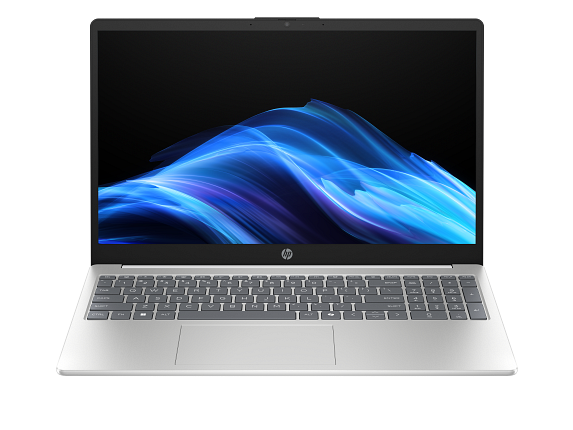
Catalog price: $ 1099.99
View HP Laptop AI 15t-fd200, 15.6" on SearchNShop
Comparison at a Glance
ProductCatalog pricePrimary decision focusSearchNShopDell Latitude 5340$ 1049.00Match to the buyer's highest-priority requirementsView productHP Laptop AI 15t-fd200, 15.6"$ 1099.99Match to the buyer's highest-priority requirementsView product
Start With the Workload
Laptop buyers often begin with processor names, RAM numbers, or screen sizes. A better starting point is the workthe machine must perform. A student writing documents, a developer running local tools, a designer working with largecreative files, and a frequent traveler all have different priorities.The Dell Latitude 5340 and HP Laptop AI 15t-fd200 should therefore be compared through workload rather than brandloyalty. The catalog identifies the Dell as a Latitude 5340 and lists it at $1,049.00. The HP is listed as an AI15t-fd200 with a 15.6-inch class display and a catalog price of $1,099.99. Those details establish a useful startingpoint, but they do not by themselves determine which laptop is better.Write down the applications you use, the number of applications you normally keep open, whether you work on batterypower, whether you connect external displays, how often you travel, and how long you expect to keep the laptop.Also consider whether your work is CPU-heavy, graphics-heavy, memory-heavy, storage-heavy, or mostly browser-based.A laptop should feel appropriately sized for the workload. Buying far beyond your needs can waste money and increaseweight or complexity. Buying below your needs can create frustration every day.The strongest comparison is therefore a requirements map. Separate “must have” requirements from “nice to have”features. Then assess both products against the must-have list before allowing secondary features to influence thedecision.
Portability Versus Screen Comfort
Portability and screen comfort are often in tension. A smaller machine can be easier to carry, while a largerdisplay can make multitasking and document work more comfortable. The right balance depends on where the laptop willbe used.The Dell Latitude 5340 should be evaluated with portability, business use, docking, and frequent movement in mind,while the HP Laptop AI 15t-fd200 is explicitly listed with a 15.6-inch display class, making screen workspace amore visible part of its profile. These are useful signals, but buyers should verify the exact dimensions and weightof the configurations they intend to purchase.Think about a typical working day. If the laptop moves between home, office, meetings, cafes, and travel, every extraamount of weight becomes noticeable over time. If the machine spends most of its life on a desk, a larger display maybe more valuable than maximum portability.Screen size is not the only consideration. Resolution, brightness, panel quality, scaling, viewing angles, andkeyboard layout can affect comfort. These should be verified from the live product listing.Also consider the external monitor scenario. If the laptop will almost always connect to a larger display, thebuilt-in screen becomes less important. If it is the primary screen for eight hours a day, screen comfort deserves amuch higher weighting.The right choice is the one that fits the user's movement pattern. Portability is not a specification to maximizeautomatically; it is a tool for reducing friction in the environments where the laptop will actually be used.
Performance and Multitasking
Performance should be judged by the tasks that create the highest sustained load, not by a single benchmark orprocessor label. For everyday work, responsiveness can depend on memory, storage, operating system behavior,background processes, and application optimization as much as headline CPU performance.The Dell Latitude 5340 and HP Laptop AI 15t-fd200 should be evaluated against the buyer's actual software stack.Browser-heavy work, office applications, coding tools, design applications, virtual machines, local databases, andvideo editing can produce very different requirements.The HP's “AI” positioning may attract buyers interested in newer AI-oriented computing features, but the presence ofan AI label should not replace a workload analysis. Ask what AI capability will actually be used. If the buyer has nosoftware or workflow that benefits from it, the feature may have limited practical value. Conversely, if local AItools become a meaningful part of the workflow, relevant hardware acceleration could matter.For the Dell, the Latitude family name can signal a business-oriented use case, but the exact configuration stillmatters. Two laptops with similar model names can behave differently depending on processor, memory, storage, display,and other configuration choices.Before buying, list the three applications that matter most. Check their recommended requirements, then leavereasonable headroom. Avoid building the decision around theoretical future workloads unless there is a concrete planto adopt them.Good performance is not merely speed. It is the absence of waiting during the tasks that dominate the user's day.
Memory, Storage, and Upgrade Thinking
Memory and storage decisions can influence how long a laptop remains comfortable to use. Buyers should consider notonly what is needed today but also how the workload is likely to change during the ownership period.Start with memory. Developers, designers, researchers, and heavy multitaskers can benefit from more memory becausemultiple applications and browser tabs compete for working space. A lighter user may not benefit enough to justify alarge premium. The correct amount is the point where the system remains responsive without paying for capacity thatwill never be used.Storage is similar. Estimate the size of active projects, media libraries, local development environments, and offlinefiles. Then add headroom for growth. External storage can reduce the need for a large internal drive, but it addsanother object to carry and manage.The Dell Latitude 5340 and HP Laptop AI 15t-fd200 should be compared using their exact configurations, not only themodel names. Check memory and storage directly on the live product page. If the configuration is fixed, ask whether itwill remain adequate for the expected ownership period.Also investigate upgradeability. Some laptops make it easier to expand or replace components than others. Do notassume that because a laptop is physically large it is automatically easy to upgrade.A useful purchasing principle is to spend on components that are difficult or expensive to change later. If storage canbe expanded externally but memory cannot, memory may deserve greater priority. If neither can be upgraded, choose aconfiguration with sufficient headroom from the beginning.
Battery and Mobile Workflow
Battery life is not simply a number on a product page. Real endurance depends on screen brightness, applications,background processes, wireless activity, video calls, and workload intensity. A laptop used for light documents canbehave very differently from one compiling code or processing media.Think about your access to power. If the laptop is mostly used beside a charger, battery capacity may not deserve thehighest weighting. If the laptop is regularly used on trains, planes, campus, meetings, or outdoor locations, batterybehavior becomes central.Charging convenience also matters. Check the exact charging method, adapter size, charging performance, and whetheryour existing chargers or docks are compatible. A laptop that requires a bulky charger can reduce the practical benefitof portability.The Dell Latitude 5340 and HP Laptop AI 15t-fd200 should both be assessed through the same mobility scenario. Imaginea full day away from a desk and identify when charging would realistically happen. Then check independent reviews ifreal-world endurance is a critical requirement, because catalog claims may use standardized testing.Battery health over time should also be considered. A laptop expected to last several years may eventually provide lessruntime than when new. Good power management and reasonable charging habits can help, but buyers should not plan aroundperfect battery performance forever.The best mobile laptop is the one that fits the user's charging opportunities. A modestly lighter device with adequatebattery behavior can be more useful than a more powerful machine that constantly needs an outlet.
Ports, Displays, and Accessories
A laptop is often the center of a larger setup. External monitors, keyboards, mice, docks, storage drives, cameras,headsets, and chargers can all become part of the workflow. Port selection and compatibility therefore deserve aspecific check.Before buying either laptop, list every accessory currently used. Identify the connector type, power requirements,display output, and data needs. Then check whether the laptop can connect directly or whether a dock or adapter will berequired.A dock can simplify a desk, but it adds cost and another potential point of failure. If the laptop will be connected tomultiple monitors and peripherals every day, docking compatibility can be more important than a small difference inprocessor performance.Display output is especially important for creative and technical users. Confirm the supported external-displayconfiguration from the exact model listing or manufacturer documentation.Wireless connectivity should also be considered. Stable Wi-Fi and Bluetooth behavior affect daily work, particularlywhen using wireless keyboards, mice, headphones, or mobile hotspots.The Dell Latitude 5340 may appeal to buyers building a business desk setup, while the HP's 15.6-inch screen class mayappeal to buyers who want more built-in workspace. Neither assumption should replace verification of the exactconfiguration.Think of the laptop as one component in a system. The best laptop is not the one with the best isolated specification;it is the one that connects cleanly to the rest of your equipment without requiring constant workarounds.
Keyboard, Touchpad, and Ergonomics
A laptop can have excellent internal hardware and still be unpleasant to use if the keyboard, touchpad, screenposition, or chassis ergonomics do not suit the owner. These are difficult to quantify, which is why buyers oftenunderweight them.Keyboard layout matters for anyone who types for hours. Pay attention to key spacing, travel, layout, function keys,and the location of frequently used controls. Developers and writers may care more about keyboard feel than a smallperformance advantage.The touchpad is similarly important for mobile use. A precise, comfortable pointing surface can reduce the need foran external mouse when working away from a desk.Ergonomics also depend on the screen. A larger 15.6-inch class display can be comfortable for multitasking, but thephysical size of the laptop can change how it fits on small tables. A more portable laptop may be easier to positionbut may provide less screen area.The Dell Latitude 5340 and HP Laptop AI 15t-fd200 should therefore be tested physically whenever possible. Productpages can describe dimensions, but hands-on comfort is personal.Consider also the working posture. If the laptop is used for long sessions, an external keyboard and monitor may beworth adding. If the machine is primarily used for short sessions, built-in ergonomics may matter less.A good laptop should disappear into the user's routine. The keyboard should feel natural, the pointing device shouldbehave predictably, and the screen should support the tasks without forcing constant adjustment.
Who Should Choose the Dell Latitude 5340?
The Dell Latitude 5340 is a sensible candidate for buyers whose priorities center on practical business computing,portability, office workflows, and a laptop that fits naturally into an existing professional environment. Its$1,049.00 catalog price also places it slightly below the listed price of the HP in this comparison.That does not make it automatically better value. Buyers should verify the exact configuration and determine whetherits processor, memory, storage, display, ports, and connectivity meet the intended workload.It can be particularly attractive when the laptop is carried frequently, used for business applications, connectedto office peripherals, and expected to remain dependable over a multi-year ownership period. Buyers should stillcheck warranty and support arrangements for their region.The strongest reason to choose it is not the Latitude name by itself. It is the combination of configuration,portability, support expectations, and workflow fit. If those factors align with the buyer's needs, the product canmake a strong practical case.It may be less suitable for someone whose priority is a large built-in display, newer AI-focused workflows, or aspecific configuration that the available Latitude listing does not provide. In that situation, the HP deserves acloser comparison.Before purchase, confirm the live listing, exact configuration, dimensions, weight, ports, battery information,warranty, and operating-system details. Model names are useful for narrowing the field, but the configuration is whatyou actually own.
Who Should Choose the HP Laptop AI 15t-fd200?
The HP Laptop AI 15t-fd200 is a strong candidate for buyers who value a 15.6-inch class display and are interestedin a newer AI-oriented laptop platform. Its catalog price is $1,099.99, only modestly above the Dell listing, so thedecision should focus on whether its particular configuration solves the buyer's needs.The AI positioning should be evaluated carefully. Buyers should identify the applications they expect to use that canbenefit from local AI acceleration or related features. If AI tools are part of the workflow, this can become ameaningful advantage. If they are not, other factors such as display comfort, memory, storage, battery behavior, andport selection may matter more.The 15.6-inch class display can also be useful for buyers who prefer more built-in workspace and spend substantial timeworking directly from the laptop. However, the larger chassis should be considered alongside portability.As with the Dell, exact configuration matters. Verify processor, memory, storage, display characteristics, ports,wireless connectivity, battery information, and warranty before ordering.The best reason to choose the HP is therefore a combination of screen preference, configuration, and relevant AIworkflow—not simply the presence of the word “AI” in the product title. A buyer who can connect those features todaily work has a stronger purchasing case than someone buying for the label alone.
How to Compare the Two Products Fairly
A fair comparison uses identical criteria for both products. Do not give one product credit for a feature while ignoringthe equivalent requirement on the other. Write the requirements first, then evaluate both products against the samequestions. This prevents brand familiarity and marketing language from quietly changing the standard.Use weighted priorities. For example, if reliability is twice as important as appearance, reflect that in the decision.A simple scoring sheet can use a 1-to-5 rating, but the numbers should support reasoning rather than replace it.Document why a product received each rating.Also separate verified facts from assumptions. Catalog price and product name are facts from the supplied data. Exacttechnical specifications should be verified from the current listing. Personal comfort, workflow suitability, andexpected value are judgments that depend on the buyer.This method is especially useful when the two products are close in price or category but different in positioning.It makes the final recommendation defensible because it is connected to requirements rather than preference alone.
Price Versus Value
Price is an important filter, but value is the relationship between what you pay and what you receive over theownership period. A lower-priced product can be excellent value when it meets all essential requirements. A higher-pricedproduct can also be excellent value when it prevents costly compromises or supports a much more demanding workload.Start with the purchase-price difference between the two products. Then ask what the additional money actually buys.If the answer is unclear, the cheaper product deserves priority. If the answer is a measurable improvement in acritical workflow, the premium may be justified.Avoid calculating value from the number of features. Ten irrelevant features are not more valuable than three featuresthat solve daily problems.Include secondary costs where relevant: accessories, consumables, maintenance, software, replacement parts, energy,and time spent managing the product. The appropriate list differs by category.Finally, consider the ownership period. A product expected to last five years should not be evaluated in exactly thesame way as a temporary purchase. Divide major costs across the expected period to understand the approximate annualcost.The best value is usually the product that solves the important problems with the fewest unnecessary compromises.
Compatibility and Fit
Compatibility is the quiet requirement that can invalidate an otherwise excellent purchase. A product may behighly capable but still unsuitable if it does not work with existing equipment, spaces, software, accessories, orpersonal preferences.Create a compatibility checklist before buying. For technology, include operating systems, ports, wireless standards,software, peripherals, displays, and power requirements. For home products, include dimensions, materials, roomconditions, cleaning requirements, and existing furniture or equipment. For office equipment, include network,security, media, and workflow requirements.Physical fit deserves equal attention. Measure the available space and compare it with the product's dimensions,including clearance needed for doors, cables, maintenance, and normal use.Personal fit matters for products such as laptops and pillows. A specification can be objectively good and still feelwrong for an individual user.The live product page should be the final verification step. Catalog data is useful for building the shortlist, butconfigurations and availability can change.
Reliability and Support
Reliability is difficult to predict from a product page, but it can be approached systematically. Look for warrantyterms, service availability, replacement parts, manufacturer support, and the reputation of the product family. Forbusiness equipment, also consider the cost of downtime and whether service agreements are available.Do not assume that an expensive product is automatically more reliable. Price can reflect capability, positioning,materials, scale, or features that have little to do with reliability.Support is part of the product. A device that can be repaired quickly may be more valuable than one that is difficultto service. For personal products, return policies can reduce the risk of a poor fit.Before purchase, record the warranty period and the process for making a claim. Keep receipts and order information inan accessible location.If the product is mission-critical, consider redundancy. A backup solution can sometimes be cheaper than purchasingthe most expensive primary product solely to avoid every possible failure scenario.The right goal is not zero risk. It is an ownership plan that makes reasonable failures manageable.
When the More Expensive Product Is Worth It
The more expensive option should win only when its premium addresses a meaningful requirement. This is a usefulrule because buyers often assume that a higher price represents better quality across every dimension.Identify the specific benefit associated with the premium. Then ask how often that benefit will be used, what problem itsolves, and whether there is a cheaper workaround. If the feature saves significant time every day, supports a criticalworkflow, or materially improves comfort, the premium may be justified.If the feature will be used once a month, the premium may be harder to defend.This approach is especially important when the price gap is substantial. A large premium needs a stronger business orpersonal case than a small premium.Also consider future use. A buyer may reasonably pay more for a product that meets a known upcoming requirement. Butfuture-proofing should be based on a concrete plan rather than fear of obsolescence.The correct question is never “Is the expensive one better?” It is “Is the improvement worth the additional money forthis particular buyer?”
When the Cheaper Product Is the Smarter Choice
The cheaper product is often the smarter purchase when it satisfies every essential requirement. Paying more for unusedcapacity or features can reduce the budget available for other important needs.To make this decision confidently, compare the two products against a must-have checklist. If the cheaper option passesevery critical requirement and the premium product mainly adds optional features, the cheaper option has a strong valuecase.Do not confuse “cheaper” with “cheap.” A product can cost less while still being professionally positioned or capable.The key is whether its capabilities match the workload.The money saved can sometimes be used more effectively on accessories, backup equipment, service, storage, betterergonomics, or maintenance.A disciplined buyer should be comfortable choosing the cheaper product when the evidence supports it. The goal of acomparison is not to justify the larger purchase; it is to find the best fit.
A Practical Decision Framework
Use a five-step process before checkout. First, define the primary use case in one sentence. Second, list fiverequirements and mark the top two as non-negotiable. Third, verify both products against those requirements using thecurrent listings. Fourth, estimate ownership costs and practical constraints. Fifth, make the purchase only afterchecking return, warranty, and availability information.If the decision remains unclear, identify the uncertainty rather than guessing. For example, the uncertainty might becomfort, real-world battery life, exact configuration, or service availability. Then find a way to reduce thatuncertainty through an in-person test, manufacturer documentation, independent review, or retailer policy.This process prevents a common mistake: buying because the product “looks right” before the important questions havebeen answered.The best comparison ends with a clear reason for the decision. “I chose Product A because it meets my three essentialrequirements at a lower total cost” is stronger than “Product A seems better.”A good buying process should leave the buyer confident even when both options are imperfect.
Product-by-Product Decision Notes
Dell Latitude 5340
The catalog lists Dell Latitude 5340 at $ 1049.00. The most useful way to evaluate this product is to translate its category and positioning into the buyer's actual requirements. Start with the work or routine it will support, then verify the exact current configuration on the SearchNShop listing. The product should be favored when it solves the buyer's highest-priority problems without forcing unnecessary compromises. Before purchase, check dimensions, included components, compatibility, warranty, returns, and any recurring costs relevant to this category. The product link below should be treated as the final verification point.
View Dell Latitude 5340 on SearchNShop
HP Laptop AI 15t-fd200, 15.6"
The catalog lists HP Laptop AI 15t-fd200, 15.6" at $ 1099.99. Its strongest purchasing case should be based on the same requirements used for Product 1 rather than a different standard. Identify which buyer priorities it serves best, then verify the exact current listing. Pay attention to configuration, compatibility, physical fit, ownership cost, warranty, and return conditions. If its advantages address problems that occur frequently, those advantages may justify choosing it even when another option appears attractive on paper.
View HP Laptop AI 15t-fd200, 15.6" on SearchNShop
Frequently Asked Questions
Which product is the better overall choice?
Neither product is universally better. The stronger choice is the one that satisfies the buyer's essential requirements with the fewest unnecessary compromises.
Should I choose based on price?
Use price as an important constraint, but compare it with expected use, ownership costs, compatibility, and the value of the features you will actually use.
How should I verify the product information?
Open the current SearchNShop listing and confirm the exact configuration, price, availability, included accessories, warranty, and other details that matter to your purchase.
What is the biggest buying mistake?
The most common mistake is choosing from a headline feature or product name before defining the real-world job the product must perform.
Is the more expensive product more future-proof?
Not automatically. Future-proofing is useful only when it addresses a realistic future requirement that is likely to matter during the ownership period.
Should I buy the product with more features?
Only when those features solve real problems. Extra features can add cost and complexity without improving the experience for a particular buyer.
Final Checklist Before Buying
- Write the primary use case in one sentence.
- Identify the three most important requirements.
- Mark which requirements are non-negotiable.
- Verify the exact current product configuration.
- Check physical dimensions and compatibility.
- Estimate recurring ownership costs where applicable.
- Compare warranty and return conditions.
- Consider how the product will be used after the first month.
- Open both live product listings before making the final decision.
- Choose the product that solves the most important problems, not the one with the most impressive marketing language.
Final Verdict
The Dell Latitude 5340 at $ 1049.00 and HP Laptop AI 15t-fd200 at $ 1099.99 are best separated by workflow priorities rather than brand. Choose the Dell when portability, business-oriented use, and a configuration that fits your professional routine matter most. Choose the HP when the 15.6-inch class display and relevant AI-oriented capabilities provide a meaningful benefit to your work. Verify the exact configuration before purchase, because the model name alone does not tell the full performance story.
Questions to Ask Before Checkout
What exact problem am I trying to solve with this purchase? A good product comparison is not a contest between two specification sheets. It is a decision exercise:
Which feature will I use every day? A good product comparison is not a contest between two specification sheets. It is a decision exercise:
Which feature would I probably never use? A good product comparison is not a contest between two specification sheets. It is a decision exercise:
What physical or compatibility constraint could make this purchase fail? A good product comparison is not a contest between two specification sheets. It is a decision exercise:
What will ownership cost after the first year? A good product comparison is not a contest between two specification sheets. It is a decision exercise:
What happens if the product does not suit me? A good product comparison is not a contest between two specification sheets. It is a decision exercise:
How easy will it be to maintain, replace, or repair? A good product comparison is not a contest between two specification sheets. It is a decision exercise:
What evidence would make me choose the other product instead? A good product comparison is not a contest between two specification sheets. It is a decision exercise:
The practical lesson is to keep the decision connected to real use. Product comparisons become less useful when they turn into a list of specifications without context. A buyer should finish the article knowing which questions to verify, which compromises are acceptable, and why one product may fit better than the other. That reasoning remains useful even when prices or configurations change.
How to Think About Long-Term Value
Long-term value is created by consistent usefulness, not by the number of features printed on a specification sheet. A good product comparison is not a contest between two specification sheets. It is a decision exercise:
A product that remains comfortable and practical after months of use can outperform a technically richer option that creates small daily frustrations. A good product comparison is not a contest between two specification sheets. It is a decision exercise:
Ownership value also includes time. Every setup step, maintenance task, compatibility workaround, or repeated adjustment consumes attention. A good product comparison is not a contest between two specification sheets. It is a decision exercise:
Durability matters because replacement creates additional purchasing effort and can interrupt a routine. A good product comparison is not a contest between two specification sheets. It is a decision exercise:
A good product should remain appropriate as the buyer's normal use evolves, while avoiding the temptation to pay heavily for hypothetical scenarios. A good product comparison is not a contest between two specification sheets. It is a decision exercise:
Value should therefore be reviewed at three points: the day of purchase, after the first month, and near the end of the expected ownership period. A good product comparison is not a contest between two specification sheets. It is a decision exercise:
The practical lesson is to keep the decision connected to real use. Product comparisons become less useful when they turn into a list of specifications without context. A buyer should finish the article knowing which questions to verify, which compromises are acceptable, and why one product may fit better than the other. That reasoning remains useful even when prices or configurations change.
Decision Scenarios
For a budget-sensitive buyer, begin with the cheaper option and identify any missing essential requirement before considering the premium. A good product comparison is not a contest between two specification sheets. It is a decision exercise:
For a performance-focused buyer, identify the workload that actually needs additional capability and verify that the product configuration provides it. A good product comparison is not a contest between two specification sheets. It is a decision exercise:
For a convenience-focused buyer, prioritize setup, maintenance, ergonomics, compatibility, and the number of recurring decisions the product creates. A good product comparison is not a contest between two specification sheets. It is a decision exercise:
For a long-term owner, place more weight on support, serviceability, durability, and the likelihood that the configuration will remain adequate. A good product comparison is not a contest between two specification sheets. It is a decision exercise:
For a first-time buyer, simplify the decision by limiting the shortlist to essential requirements instead of comparing every possible specification. A good product comparison is not a contest between two specification sheets. It is a decision exercise:
For a professional buyer, document the decision criteria so the purchase can be explained and repeated consistently across teams. A good product comparison is not a contest between two specification sheets. It is a decision exercise:
The practical lesson is to keep the decision connected to real use. Product comparisons become less useful when they turn into a list of specifications without context. A buyer should finish the article knowing which questions to verify, which compromises are acceptable, and why one product may fit better than the other. That reasoning remains useful even when prices or configurations change.
Extended Buying Analysis
A useful way to reduce uncertainty is to distinguish reversible and irreversible decisions. A reversible decision is one that can be corrected cheaply after purchase, such as adding an accessory or changing a minor setting. An irreversible decision is harder to correct, such as choosing the wrong physical size, an unsuitable configuration, or a product that cannot meet the workload. Spend more research effort on irreversible decisions. This principle keeps the buying process efficient while protecting against expensive mistakes.
A comparison is strongest when it acknowledges uncertainty. If a specification has not been verified, say so and check the live listing. If comfort cannot be predicted, use a return policy or hands-on test where possible. If future demand is unknown, build a realistic range instead of assuming maximum growth. Honest uncertainty produces better decisions than false precision.
Availability is another practical consideration. A product that is difficult to obtain or has uncertain delivery may not be suitable when the purchase is time-sensitive. Check the current listing and delivery information immediately before ordering.
The comparison should also account for friction. Friction is the small effort required to make a product work: carrying it, configuring it, cleaning it, charging it, connecting it, adjusting it, or replacing supplies. A single friction point may be insignificant, but repeated friction compounds over months. When two products are technically adequate, the one that creates less recurring friction can be the better purchase.